
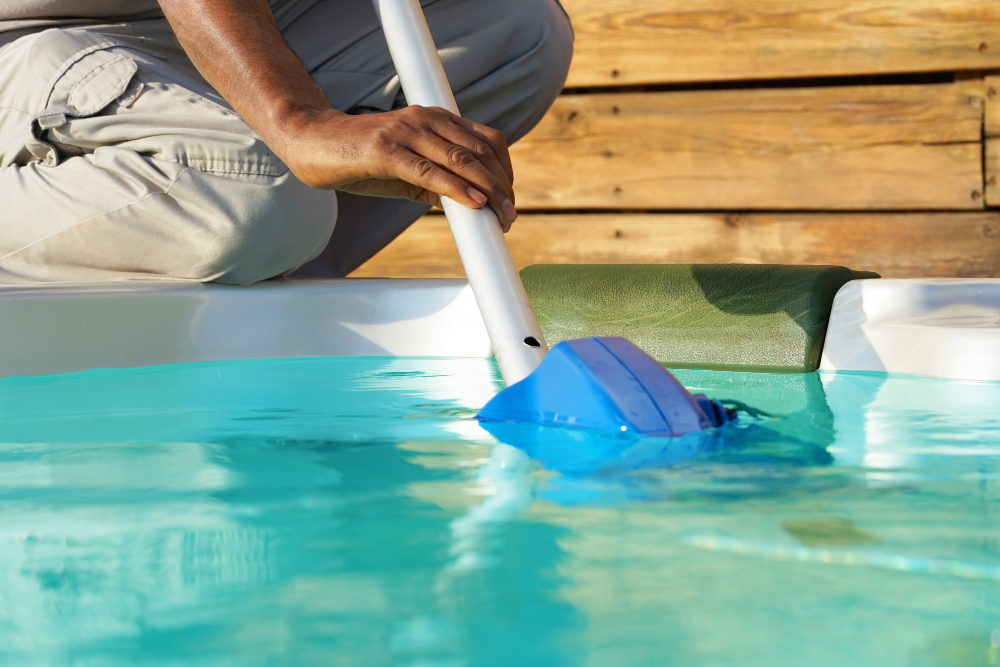
Pool Maintenance Is Not Just a Summer Job
If you own a pool in the Greater Cincinnati area, you already know that Ohio’s four distinct seasons create unique challenges. Summers are hot and humid, winters bring freezing temperatures, and spring and fall deliver unpredictable swings in between. Each season demands a different maintenance approach.
At High Tide Pools & Spas, we have maintained pools across West Chester, Mason, Loveland, Maineville, and Milford for more than 24 years. This guide covers everything you need to know about keeping your pool in peak condition throughout the year — whether you handle maintenance yourself or work with a professional service.
Spring: Opening Your Pool the Right Way
Spring opening sets the tone for the entire swimming season. Rush through it, and you will be fighting water chemistry problems all summer. Do it right, and the rest of the season practically takes care of itself.
When to Open
In the Greater Cincinnati area, most pool owners open between mid-April and early May. The key indicator is consistent air temperatures above 60 degrees Fahrenheit. Opening too early wastes chemicals and energy. Opening too late allows algae to get a foothold under the cover.
Spring Opening Checklist
-
Remove and clean the winter cover — Pump off standing water, remove debris, and let the cover dry completely before folding and storing it. A clean, dry cover lasts significantly longer.
-
Inspect the pool — Walk the perimeter and check for visible damage to the coping, tile, deck, and interior surface. Look for cracks, stains, and any signs of animal intrusion.
-
Reconnect equipment — Reinstall drain plugs, reconnect the pump, filter, heater, and any automated systems. Check all connections for leaks before running the system.
-
Fill the pool — Bring the water level to the middle of the skimmer opening. If you lowered the water significantly for winter, this may take 12 to 24 hours with a garden hose.
-
Start circulation — Run the pump and filter continuously for the first 24 to 48 hours to turn over the water multiple times and flush the plumbing.
-
Test and balance water chemistry — This is the most important step. Test pH, chlorine, alkalinity, calcium hardness, and cyanuric acid. Bring everything into the proper range before heavy use begins.
Target ranges for Ohio pools:
- pH: 7.2 to 7.6
- Free chlorine: 2.0 to 4.0 ppm
- Total alkalinity: 80 to 120 ppm
- Calcium hardness: 200 to 400 ppm
- Cyanuric acid (stabilizer): 30 to 50 ppm
-
Shock the pool — Apply a chlorine shock treatment to eliminate any bacteria, algae spores, or contaminants that accumulated over winter.
-
Run the filter — Clean or backwash the filter after the initial shock treatment. Replace the filter media if it is more than 3 to 5 years old.
Summer: Keeping Water Clear During Peak Use
Summer in Cincinnati means temperatures in the 80s and 90s, high humidity, and frequent pool use. This combination creates ideal conditions for algae growth, chemical consumption, and equipment strain.
Weekly Maintenance Tasks
- Test water chemistry at least twice per week during heavy use periods
- Skim the surface daily to remove leaves, bugs, and debris
- Vacuum the pool weekly or run an automatic cleaner
- Brush walls and steps weekly to prevent algae from taking hold
- Clean skimmer and pump baskets at least twice per week
- Check filter pressure — backwash or clean when pressure rises 8 to 10 PSI above the clean baseline
Summer Problem Prevention
Algae: The most common summer pool problem in Ohio. Prevention is far easier than treatment. Maintain consistent chlorine levels, brush regularly, and shock the pool weekly during peak season.
Cloudy water: Usually caused by poor filtration, low chlorine, or high calcium. Test the water, ensure the filter is clean, and check that the pump is running adequate hours per day. Most Cincinnati pools need 8 to 10 hours of pump runtime during summer.
High chlorine demand: Heavy use, rain, and hot temperatures all consume chlorine faster. If you find yourself adding chlorine frequently, check your cyanuric acid level. Low stabilizer lets UV rays burn off chlorine rapidly.
Equipment issues: Summer puts the most stress on your pump, filter, and heater. Listen for unusual sounds, check for leaks around fittings, and monitor energy consumption. Catching small problems early prevents mid-season breakdowns.
Fall: Preparing for the Off-Season
Fall is the most overlooked maintenance period, and it is also one of the most important. What you do in September and October directly affects how easy or difficult your spring opening will be.
Fall Maintenance Tips
- Continue regular maintenance as long as the pool is open. Do not slack off because swimming season is winding down.
- Remove leaves promptly — Falling leaves are the biggest challenge for Cincinnati pool owners in autumn. A leaf net over the pool or daily skimming prevents organic matter from sinking to the bottom and staining the surface.
- Lower the water temperature gradually by turning off the heater before closing. This discourages late-season algae growth.
- Balance chemistry one final time before closing. Proper chemistry at closing means less work at opening.
- Trim overhanging branches — Late fall is a good time to cut back trees that drop debris into the pool.
When to Close
Most Cincinnati-area pools close between mid-October and early November. Close when nighttime temperatures consistently drop below 50 degrees. Closing too early means you miss pleasant fall swimming days. Closing too late risks freeze damage if a cold snap arrives unexpectedly.
Winter: Protecting Your Investment
A properly winterized pool in Ohio should require almost no attention between closing and opening. The work is all in the closing process.
Winter Closing Checklist
-
Balance the water — Adjust pH, alkalinity, and calcium hardness to the high end of their acceptable ranges. This gives a buffer against chemical drift over the winter months.
-
Shock and add algaecide — A strong chlorine shock followed by a quality winter algaecide helps prevent algae from growing under the cover.
-
Lower the water level — Drop the water 4 to 6 inches below the skimmer opening, or to the level recommended by your pool builder. This prevents freeze damage to the skimmer and tile line.
-
Winterize the plumbing — Blow out all plumbing lines with compressed air and plug the return fittings. Water left in pipes can freeze, expand, and crack the plumbing. This is not optional in Ohio.
-
Remove and store equipment — Drain the pump, filter, heater, and chlorinator. Store removable equipment in a dry location. If equipment cannot be removed, protect it with weatherproof covers.
-
Install the winter cover — A solid safety cover or mesh cover protects the pool from debris, sunlight, and unauthorized access. Secure it properly so wind and snow load do not shift it.
Mid-Winter Checks
Even with a closed pool, a quick monthly check is worth the effort:
- Ensure the cover is secure and not sagging from water or debris accumulation
- Pump off standing water from the cover surface
- Check that the water level has not dropped significantly, which could indicate a leak
- Verify equipment storage areas are dry and secure
When to Call a Professional
Pool maintenance is manageable for many homeowners, but there are situations where professional help makes a real difference:
- Opening and closing — Improper winterization is the most common cause of expensive spring repairs. Professional closing pays for itself by preventing freeze damage.
- Equipment repair or replacement — Pumps, heaters, and filters require specialized knowledge to diagnose and repair.
- Persistent water chemistry problems — If you cannot keep the water balanced despite following best practices, a professional can identify the underlying cause.
- Leak detection — Pool leaks are notoriously difficult to locate. Professional leak detection uses specialized equipment to pinpoint the source.
- Time and convenience — Many busy homeowners simply prefer to hand off the weekly routine to a trusted service.
Keep Your Pool in Top Shape
Whether you are a DIY pool owner or prefer professional support, High Tide Pools & Spas is here to help. We provide weekly maintenance plans, seasonal opening and closing services, equipment repair, and everything in between for homeowners across West Chester, Mason, Loveland, Maineville, Milford, and the Greater Cincinnati area.
Call us at (513) 951-8433 or contact us online to set up a maintenance plan that fits your needs.